
10 Good Reasons to Sew Your Own Clothes
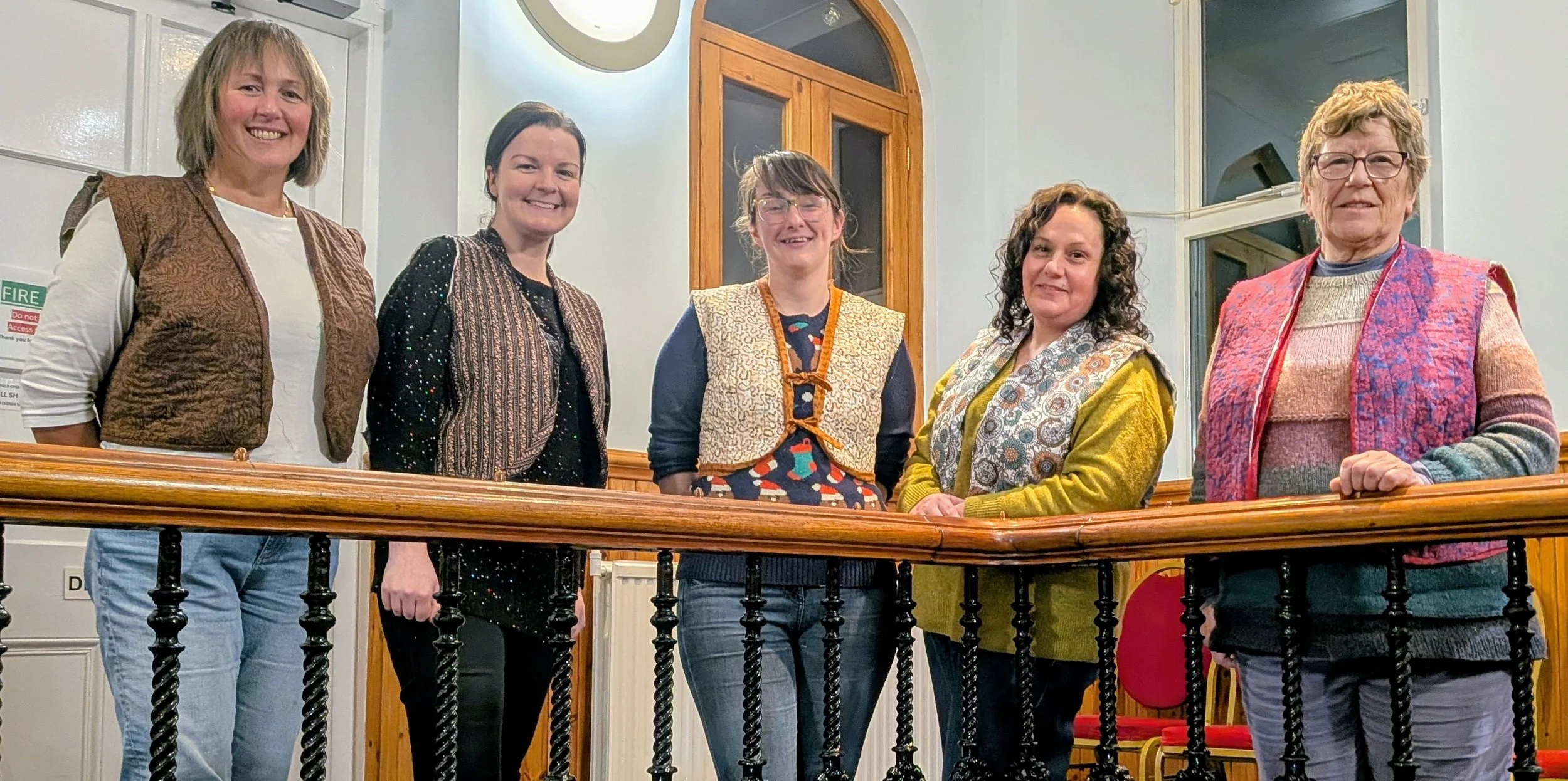
Ingrid, Amy, Beth, Cathy and Mary model their handmade waistcoats
A common conversation in my line of work is this: Why Bother?
And that’s not all together surprising - in the age of Shein, Amazon and Temu, Ready To Wear (RTW) clothing is cheaper than ever. I’ve just this minute googled Temu dresses, and been presented with an enormous variety of beautifully styled “cotton-look” maxi dresses (including a pink and red gingham zipped number, disconcertingly similar to the Fabric Godmother Aspen dress), ranging in price from £6.48 to £14.97 (including delivery). Many people mistakenly assume that making your own clothes is a budget option, but the reality couldn’t be further from the truth - with good indie patterns costing upwards of £15, plus the cost of fabric, notions, tools and hours of your time - handmade clothes truly are a luxury item.
True enough, not too long ago sewing and knitting were an economical necessity, and an essential part of the work of a housewife. This was certainly the case for my grandmother and her mother. But with exploitative modern manufacturing systems and vastly improved career opportunities for women, many now view sewing as a “soft skill” - a bit tradwife, a bit unnecessary, maybe even a bit below us. In Scottish schools, the title “home economics” hasn’t helped, and we’ve seen school sewing lessons rapidly dying out. The result of which is that whole generations have very little connection with their clothing, beyond how it looks.
So it isn’t surprising that many people feel like “there’s no point learning to sew”. And, if you’ve no interest, then fair enough - but if you are curious, then I hope I can persuade you to take the leap…
Fit - Standardised sizing is a load of rubbish. I honestly can’t remember the last time a piece of RTW clothing fitted me perfectly. I’m tall, with wide hips, broad shoulders and a bigger chest. Nothing ever fits me, because I quite literally don’t fit the mold. And I know I’m not alone in this - fit is the number one reason new sewists give me for wanting to make their own clothes. And quite often they then reel off their “problems areas” - “my legs are too short”, “my chest is too flat”, etc etc. But learning to sew your own can empower you make clothes that really fit, and realise that it’s not your body that’s the problem - it’s fashion’s stupid sizing system! That change of perspective can work wonders for your body confidence and self-esteem. And there are so many brilliant resources out there for achieving a perfect fit - Tilly and the Buttons offer a brilliant online masterclass, and Jenny Rushmore of Cashmerette has published two fantastic pattern books with extensive fitting tips for curvy bodies. We also cover some basic fit alterations in our Quilted Waistcoat Class - best for those who prefer to learn in person.
Ethical manufacturing - You know your me-made clothes are sweatshop free. The horrors of mass-manufacturing systems in the fashion and textile industries are well-documented. We know there’s a reason why most of our clothes are made in developing countries, and RTW clothes are so cheap - it’s because the people who make them are criminally underpaid and often working in unsafe conditions. Many of us will remember the Rana Plaza Disaster of 2013 - a horrifying incident just outside of Dhaka, Bangladesh, where an eight-storey factory making fashion for a number of familiar high street brands collapsed killing more that 1,100 workers inside, and leaving many more with life-changing injuries. You can read more about it here, or watch the excellent documentary The True Cost. Sweatshops are powered by a modern obsession with cheap, readily available clothing - and shockingly, 13 years on from Rana Plaza, things haven’t improved much. Finding brands that are absolutely transparent about their supply chains is a real challenge - your options will be severely limited if you take this approach. My prefered solution? Make my own. That way I know that my clothes were made by an adult woman sat in a comfy chair with a cup of tea, rather than a child who ought to be at school slaving over cheap clothes for a pittance.
Style - Create exactly the clothes you want to wear - no compromise. As someone who lives life at the top end of the “standard” size range or the bottom end of “plus size”, I can absolutely attest to how the “nice clothes” are mostly reserved for a certain type of body. Big Fashion produces huge swathes of fun and varied clothing in smaller sizes, but at the bigger end? Well, there’s a lot of black, a lot of baggy and a lot of boring. A walk around the ladies-wear section of a charity shop is testament to this - the rails heave with fast-fashion items in sizes 6 - 12, while a few plus-size oddities might hang around the far end. Everyone, regardless of shape or size, should be able to access beautiful clothing that feels like you.
Sustainability - You will care for your handmade clothes better, and wear them for longer. The statistics around the over-consumption of clothing are alarming - for an excellent summary, read this blogpost by Earth.org. Whereas fast-fashion is made to be thrown away, something made by you is likely to get more wear, more care, and last much longer. After all, if you didn’t want to wear it all the time, you wouldn’t go to the effort of making it!
Connection - Reclaimed materials have a back-story. I absolutely love making clothes from reclaimed fabrics - partly for the environmental benefits, and partly because in so doing I know that whatever I make will be truly unique. And those reclaimed fabrics have already had a life - whether it be a jacket made from a Liberty curtain (I like to imagine a homeowner in the 1970’s agonising over their choice for the sitting room, and the things those curtains might have seen over the many years that they provided the backdrop for family life…) or a top made from hand-embroidered tablecloths (who poured all those hours into it, and when? And how did it come to be in a charity shop?!). There’s something romantic about giving those fabrics a new lease of life, and saving them from landfill.
Quality - Learn to source the best quality materials in line with your budget, and finish projects to a high standard. There’s nothing more frustrating than poor quality clothes - fabrics that pill, seams that itch, zips that don’t quite sit right. They’re not only annoying for you, but also make it almost impossible to pass these clothes on when you’re finished with them. Did you know that only about 50 - 70% of clothes donated to charity shops actually make it to the shop floor? The rest, not good enough to sell, are “ragged” - and often the charity themselves actually have to pay to dispose of them. Make your own, however, and you can chose high quality natural fibres, and take your time over finishing techniques that will withstand wear and tear. Not only will your high quality me-mades be better for the planet, but also so much nicer to wear.
Good for mental health - Creative pursuits are good for you. They stop you doom-scrolling, and absorb your attention. Since COVID this has been a real area of scientific interest with lots of studies being conducted into how creative hobbies are good for general well-being - but in all honesty, I think the anecdotal evidence is enough. I for one have sewn and knitted my way through some of life’s biggest challenges - grief, change, stress - and it’s undeniable that absorbing myself in the flow-state of a project takes my mind away from whatever’s troubling me, in something close to a medititive state. And when you’re finished, you essentially give yourself a present! Owning something that you have made is tangible proof of your own skills and capabilities. And that’s important.
Community - One of my favourite things about sewing and knitting are the communities they foster. This is true both online and in person. Facebook and Instagram help us find our tribes - whole communities of people spread accross the world sharing pictures of their makes, asking questions and cheering each other on. It’s so inspiring! #sewistsofinstagram is one of my favourites. And in-person groups like the Sewing Social and Makkin’ and Yakkin’ are even better - a safe-space to work and chat with like-minded locals is a really special thing, and often a space where lasting friendships are formed. Crafty people really are the best people!
Ready availability - In Shetland, in-person shopping opportunities are few and far between, and making your own is so much more enjoyable than ordering online or taking shopping trips to Aberdeen. I won’t labour this point because if you live in Shetland you know this as well as I do. Learn to sew. If you can dream it, you can make it - simple as that!
You get to say “Thanks! I made it!”. Honestly? There’s no better feeling!
